

Introduction
The Ugly Truth & an Invitation
A Challenge, Should You Accept It
Conclusion
Introduction
We spend most of our lives molding our identities, composing personal, private manifestos in our minds, desperate to define and convey our values. Many of us construct citadels of conviction that we proudly occupy. We claim to value courage, but falter at the first sign of risk. We assert our honesty, yet embellish our stories to make them more palatable. Pretty much, we all claim to value truth, yet we recoil when reality enters the chat and challenges or disrupts our sense of comfort. Whew. By merely reading this, one can feel the breath of infinite spaces.
Don’t align your actions merely to escape judgment or engage in superficial, performative behavior to appear “good.”
This represents a gorge, one characterized by significant dissonance. It’s the divide between the story we tell ourselves and the existence we experience. It’s essential to bridge that gap, but not out of fear. Don’t align your actions merely to escape judgment or engage in superficial, performative behavior to appear “good.” Instead, take an architectonic approach: Act in accordance with someone who creates their own reality, the master of their own destiny; one who is not a victim of their history.
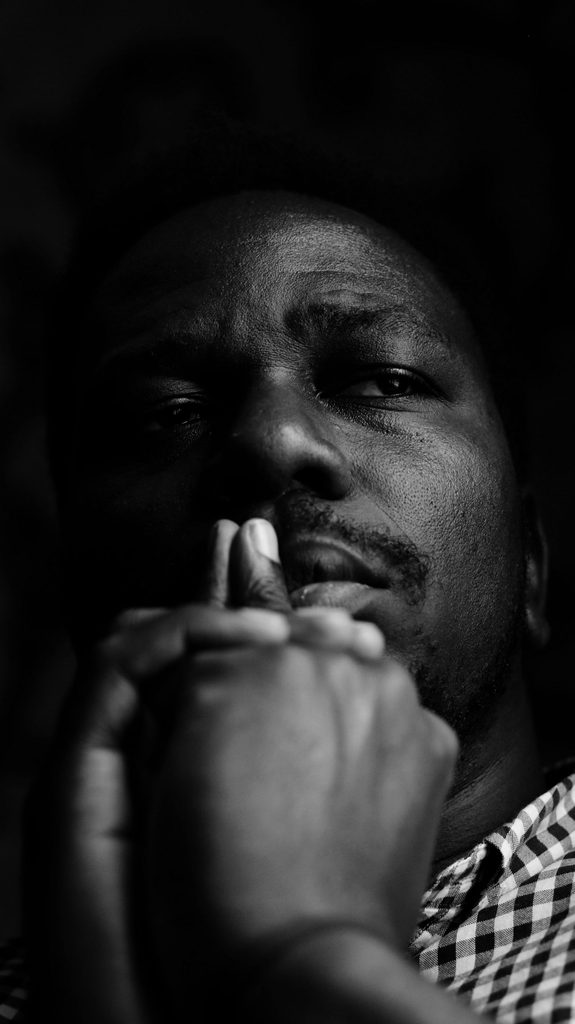
The Ugly Truth & an Invitation
Here’s the ugly truth: When our actions are inconsistent with our beliefs, we create a division within ourselves. This results in the appearance of a shadow self—faute de mieux—that mutters, sotto voce, “Fraud. You are not the person you claim to be.” These internal conflicts drain your energy, blunt your insight, and rob you of the confidence that comes from knowing that your integrity remains intact. Self-awareness serves as the light that illuminates this division. It does not act as a severe critic; rather, it’s more like a caring mentor. It poses a singular, impactful question: “If you really believe this, why don’tyour actions reflect it?” To quote Epictetus: “Whatever moral rules you have deliberately proposed to yourself, abide by them as they were laws, and as if you would be guilty of impiety by violating any of them.” Enchiridion, 50. In other words, your philosophy is not to be explained; it is to be embodied.
This is neither a demand nor an invitation to achieve perfection—far from it. It’s an invitation to attain wholeness. Synchronize your actions with your deepest beliefs; live in alignment with who you say you are. By doing so, an extraordinary transformation occurs: The noise of hypocrisy is silenced, the stress associated with living in constant pretense dissipates, and you move through life with remarkable clarity. The transformation allows you to become the most compelling case for your own principles; you don’t need to persuade others of your values—your mere existence validates your values.
A Challenge, Should You Accept It
In and of itself, this represents the pinnacle of personal development because it’s all axiological; i.e., it’s a human-based value system. This gives you the choice: Stop destroying yourself; begin the process of unification. It requires examining your convictions and declaring, “I will not merely hold these beliefs; I will embody them. I am them.”
Here’s my challenge: Stop expecting consistency from the world. Don’t postpone your authenticity until others exhibit theirs. Instead, turn your focus inward. Examine the gap between your beliefs and your actions, and like a sculptor, start removing any superfluous material until the statue and stone are one.
You have received the philosophical theorems, with which you ought to be familiar, and you have been familiar with them. What other master, then, do you wait for, to throw upon that the delay of reforming yourself? Epictetus, Enchiridion, 50.
Conclusion
To exemplify the perfect paradigm of the (kind of) thinking you advocate is not merely a measure of perfection; it’s a form of liberation. Become the paradigm. Let your existence serve as irrefutable evidence of who you truly are, of your belief system (whatever it may be). By achieving this, you stop representing an idea; you begin to embody it. There is no greater strength.